
Your staircase is one of the first things people see when they walk through your front door. It is also one of the most heavily used surfaces in the entire house — every person, child, and pet in your home climbs it dozens of times a day, every single day, for years. In this article we will cover carpet vs hardwood stairs deeply.
Which makes the choice between carpet and hardwood stairs one of the most consequential flooring decisions you will make during any renovation. Get it right and your staircase becomes a visual centrepiece that adds genuine resale value. Get it wrong and you are looking at worn-out treads, safety hazards, or a costly replacement within five years.
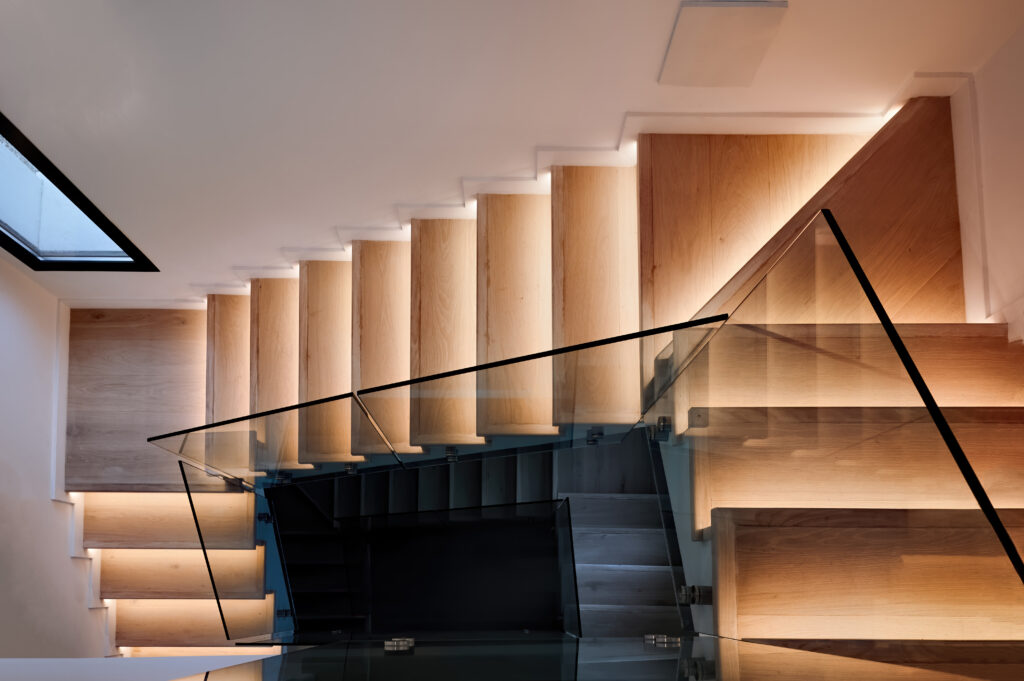
At Alliston Flooring, we install staircases across Simcoe County every week. Here is the complete, honest breakdown of carpet versus hardwood stairs — covering safety, cost, durability, maintenance, and what Ontario’s specific climate does to both options over time.
Why Stairs Are Different From Every Other Floor in Your Home
Before comparing materials, it is worth understanding why staircases present unique challenges that flat floors do not.
Every step you take on a staircase involves a heel strike on the very edge of the tread — the nose of the step — followed by a push-off motion as your weight transfers forward. This concentrates enormous repetitive stress on a very small area of the surface. The same floor that holds up perfectly in a living room can wear noticeably at the stair nose within a year or two if the wrong product or installation method is used.
Stairs also present a safety dimension that flat floors do not. A slip on a flat floor means a fall to the ground. A slip on a staircase means a fall down multiple steps, which is a genuine injury risk for children, elderly family members, and anyone carrying something that limits their ability to grab the railing. Traction and grip are not aesthetic considerations on stairs — they are safety considerations.
With both of those factors in mind, here is how carpet and hardwood each perform.
Option 1 — Carpet Stairs
Carpet has been the traditional staircase choice for decades, and for good reason. On a purely functional level, carpet does several things on stairs that hard surfaces simply cannot match.
The Safety Advantage
Carpet provides natural grip underfoot that dramatically reduces slip risk, particularly for children running up and down in socked feet and for older family members navigating stairs in the dark. The soft pile creates friction against every type of footwear — and against bare feet and socks, where hard surface stairs are at their most dangerous.
For families with young children or elderly parents living in the home, this safety advantage is not a minor consideration. It is often the deciding factor, and it is a legitimate one.
Sound Absorption
A carpeted staircase is dramatically quieter than a hard surface staircase. Every footstep is absorbed rather than amplified. If you have children who wake up early, teenagers who come home late, or anyone in the household who works night shifts and sleeps during the day, the sound difference between carpet and hardwood stairs is significant enough to affect daily quality of life.
Comfort Underfoot
Carpet is warmer and softer underfoot than any hard surface alternative. In an Ontario winter when the ground floor is cold and the house has been sitting overnight, stepping onto a carpeted staircase feels substantially different from stepping onto bare wood or vinyl.
Cost
Carpet stairs are consistently the most affordable staircase option from both a materials and installation perspective. If budget is a genuine constraint, carpet delivers the best functional result per dollar spent on a staircase.
The Drawbacks of Carpet Stairs
Wear concentration: Stair carpet wears at the nose of each tread first, and it wears there faster than anywhere else in the house. Within five to eight years in a busy household, you will typically see visible flattening and fraying at every tread edge while the rest of the carpet still looks reasonable. Replacing stair carpet means replacing the entire run, not just the worn sections.
Cleaning difficulty: Spills, pet accidents, and tracked-in dirt on carpet stairs are significantly harder to clean than on hard surfaces. Stair carpet cannot be mopped. Each tread requires individual attention, and spills that soak through the pile to the underpad can cause persistent odour that is nearly impossible to fully eliminate.
Pet hair: For households with shedding dogs or cats, carpet stairs become a visible collection point for pet hair that requires frequent vacuuming to keep presentable. This is a minor inconvenience for some households and a significant irritant for others.
Resale value: While carpet stairs are perfectly acceptable to buyers, they do not add the visual impact that hardwood or stained oak stairs do during a home showing. In Ontario’s competitive real estate market, exposed hardwood stairs consistently photograph better and generate more buyer interest than carpet.
Option 2 — Hardwood Stairs
Hardwood stairs have become increasingly popular in Ontario over the past decade, driven by the shift toward open-concept layouts where the staircase is visible from multiple rooms and functions as a design element rather than just a functional passage.
The Visual Impact
Nothing photographs better in a home listing than a well-executed hardwood staircase. White oak treads with a matte finish, a contrasting painted riser, and a matching newel post create a focal point that buyers remember. In a market where first impressions are everything and most people preview homes online before visiting in person, a hardwood staircase in the listing photos is a genuine competitive advantage.
Durability and Longevity
High-quality hardwood or engineered hardwood stair treads, properly installed and finished, last significantly longer than carpet in most households. Unlike carpet, which wears visibly at the nose, a hardwood tread with a durable finish resists this concentrated wear for years, and can be sanded and refinished if the surface ever does show meaningful wear — something carpet cannot offer.
Cleaning and Maintenance
Hard surface stairs are dramatically easier to maintain than carpet. Spills wipe up immediately. Pet hair does not embed in the surface. Wet boots from Ontario winters can be wiped clean without the extended drying time that saturated carpet requires. For busy households, the daily maintenance difference is meaningful.
Resale Value
Hardwood stairs add measurable resale value in the Ontario market. Real estate agents consistently cite updated staircases as one of the renovation investments that returns the highest percentage of its cost at resale, particularly in the Simcoe County and Barrie markets where Alliston Flooring operates.
The Drawbacks of Hardwood Stairs
Slip risk on smooth finishes: A smooth, glossy hardwood stair tread in socked feet is genuinely slippery, particularly on the nose of the step. This is the most important technical consideration when choosing a stair finish. Matte and satin finishes with light texture provide significantly better grip than high-gloss finishes. Stair nose profiles with a slightly rounded rather than sharp edge also reduce slip risk by preventing the heel from catching.
Noise: Hardwood stairs amplify sound. Every footstep, every dog nail, and every dropped object echoes in a way that carpet completely eliminates. In open-concept homes where the staircase is adjacent to living areas or bedrooms, this noise difference is worth factoring into the decision carefully.
Cost: Hardwood stair installation is more expensive than carpet across both materials and labour. Each tread requires precise measurement, cutting, fitting, and finishing as an individual piece. The stair nose — the profiled edge of each tread — requires a custom matching nosing piece that adds both material cost and installation time. Budget accordingly.
Not appropriate for all households: For families with toddlers just learning to navigate stairs, or homes with elderly residents who have mobility concerns, the slip risk of hard surface stairs may outweigh the aesthetic and maintenance advantages. Honesty about this trade-off is something we always discuss with customers before recommending a direction.
Option 3 — The Hybrid Approach: Carpet Runner on Hardwood
The option that an increasing number of Ontario homeowners are choosing — and the one we install most often in higher-end renovations — is a combination of both: hardwood or engineered hardwood treads with a carpet runner down the centre.
This approach gives you the visual impact and resale value of exposed wood on either side of each tread, the safety and sound absorption of carpet in the central walking path, and the ability to change the carpet runner in the future without touching the hardwood underneath.
A well-executed carpet runner on hardwood stairs is arguably the best of both worlds — it photographs beautifully, it is safer than bare hardwood, it is quieter than fully exposed wood, and it can be updated as design tastes change without a full staircase renovation.
The trade-off is cost — this is the most expensive of the three options because it combines the material and installation requirements of both surfaces. But for households that want both aesthetics and safety, it is genuinely the superior solution.
What Ontario’s Climate Means for Your Staircase Choice
Ontario homeowners face a specific seasonal challenge that most staircase guides written for other markets completely ignore.
From November through April, every person entering your home tracks in road salt, sand, and ice melt chemicals on their boots. On a carpeted staircase, this grit embeds in the pile and acts as an abrasive against the carpet fibres with every subsequent step — accelerating wear noticeably compared to warmer climates. Regular vacuuming helps but does not eliminate this effect entirely.
On a hardwood staircase, the same salt and grit sits on the surface rather than embedding in it, meaning it can be swept or mopped away cleanly. However, if salt sits on a hardwood tread for extended periods without being wiped up, it can dull the finish over time.
The practical conclusion for Ontario homes: whichever surface you choose, your entryway floor and the bottom two or three stairs take the most abuse. Designing your staircase renovation with this in mind — using a more durable or easily replaceable material at the base, or installing a high-quality entryway mat that captures the majority of grit before it reaches the stairs — extends the life of your investment meaningfully.
The Cost Comparison for Ontario Staircases in 2026
Staircase pricing varies based on the number of stairs, the complexity of the design, whether there are landings, and the specific materials chosen. The ranges below reflect typical projects in the Simcoe County and Barrie market.
Carpet stairs: Materials and professional installation for a standard 13-step staircase typically range from moderate to mid-range investment, depending on carpet quality and pile type. This is consistently the most affordable complete staircase option.
Hardwood or engineered hardwood stairs: Materials and installation for the same 13-step staircase represent a mid to premium investment, with the specific price driven by the wood species, tread thickness, finish type, and stair nose profile selected. Engineered hardwood is typically more cost-effective than solid hardwood for stairs while delivering comparable aesthetics.
Carpet runner on hardwood: This combination represents the premium end of the staircase range, reflecting the combined material and labour requirements of both surfaces.
Because every staircase is structurally different — riser height, tread depth, the condition of the existing substrate, the presence of curved or angled sections — we always conduct an in-home measurement before quoting any staircase project. The numbers above are starting points, not fixed prices.
The Verdict — Which Should You Choose?
Choose carpet stairs if: You have young children or elderly family members for whom slip safety is the primary concern. You want the quietest possible staircase. You are working within a tighter renovation budget. Your staircase is not visible from main living areas and is not a focal point of the home.
Choose hardwood stairs if: Resale value and visual impact are priorities. You want a low-maintenance surface. Your staircase is visible from open-concept living areas and functions as a design element. You will use a matte or satin finish and are comfortable with the traction trade-off.
Choose a carpet runner on hardwood if: You want the best of both aesthetics and safety. You are investing in a longer-term renovation where versatility and resale impact both matter. Budget allows for the premium approach.
Every home and every household is different. The right answer depends on who lives in the home, how the staircase is positioned within the layout, and what the renovation is ultimately for — daily quality of life, resale preparation, or both.
Get an Expert Opinion on Your Specific Staircase
Staircase renovations are one of our specialties at Alliston Flooring. We measure, supply, and install both carpet and hardwood staircases across Alliston, Barrie, Bradford, Newmarket, and Innisfil — and our team can look at your specific staircase, discuss your household’s needs, and give you an honest recommendation before you commit to anything.
Frequently Asked Questions
Can I install LVP or laminate on stairs?
Yes. It is an increasingly popular choice due to its durability and waterproof properties.
However, there is a critical requirement: you must use a stair-specific nosing profile. Standard LVP or laminate planks should never be used to cover the exposed nose of a stair tread. Without a proper nosing piece, the flooring becomes a safety hazard and will fail prematurely. When installed correctly, LVP stairs are a durable, attractive option perfect for open-concept homes.
How long does carpet last on stairs?
In a typical Ontario household, expect stair carpet to last 5 to 10 years before visible wear on the tread nose requires replacement.
- The lower end (5 years): Households with high daily traffic, large dogs, or children.
- How to extend its life: Invest in a high-quality underpad and choose a tightly woven carpet pile rather than a cut pile.
Can hardwood stairs be refinished if they get scratched?
Yes. Unlike carpet, which requires full replacement when worn, hardwood can often be restored to like-new condition.
- Solid hardwood treads: Can be sanded and refinished multiple times over their lifespan.
- Engineered hardwood treads: Can typically be refinished once or twice, depending on the thickness of the real wood veneer.
How do I make hardwood stairs less slippery?
To maximize safety without sacrificing style, consider these solutions:
- Opt for matte or satin finishes instead of high gloss.
- Choose textured treads rather than perfectly smooth surfaces.
- Use rounded stair nosing rather than sharp, square edges.
- Add non-slip strips along the nose of each tread. These are available in finishes that blend seamlessly with the wood to provide grip without ruining the aesthetic.
- Install a carpet runner, which provides excellent traction and adds visual warmth to the staircase.
Does staircase flooring affect home resale value in Ontario?
Yes, meaningfully. A dated or worn staircase is one of the first things buyers notice during showings—and one of the most common excuses used to negotiate a lower price.
Conversely, Ontario real estate agents consistently cite updated staircases (especially modern hardwood or engineered hardwood) as having one of the strongest returns on investment. In the Simcoe County and Barrie markets, renovating your stairs before listing typically pays for itself and then some.
How long does staircase installation take?
Timelines depend on the material you choose:
- Carpet: A standard 13-step staircase is typically completed in 1 day.
- Hardwood: Usually takes 2 to 3 days. The precision required for fitting individual treads, installing nosing, and finishing takes extra time, especially if subfloor prep is needed.
(Note: We always provide a specific timeline estimate during your free measurement visit.)
About Us Alliston Flooring supplies and installs carpet, hardwood, engineered hardwood, and LVP staircases for homeowners in Alliston, Barrie, Bradford, Newmarket, Innisfil, and surrounding Simcoe County, Ontario.
Pingback: The 3 Best Flooring Options for Dogs in 2026 (Scratch Proof)